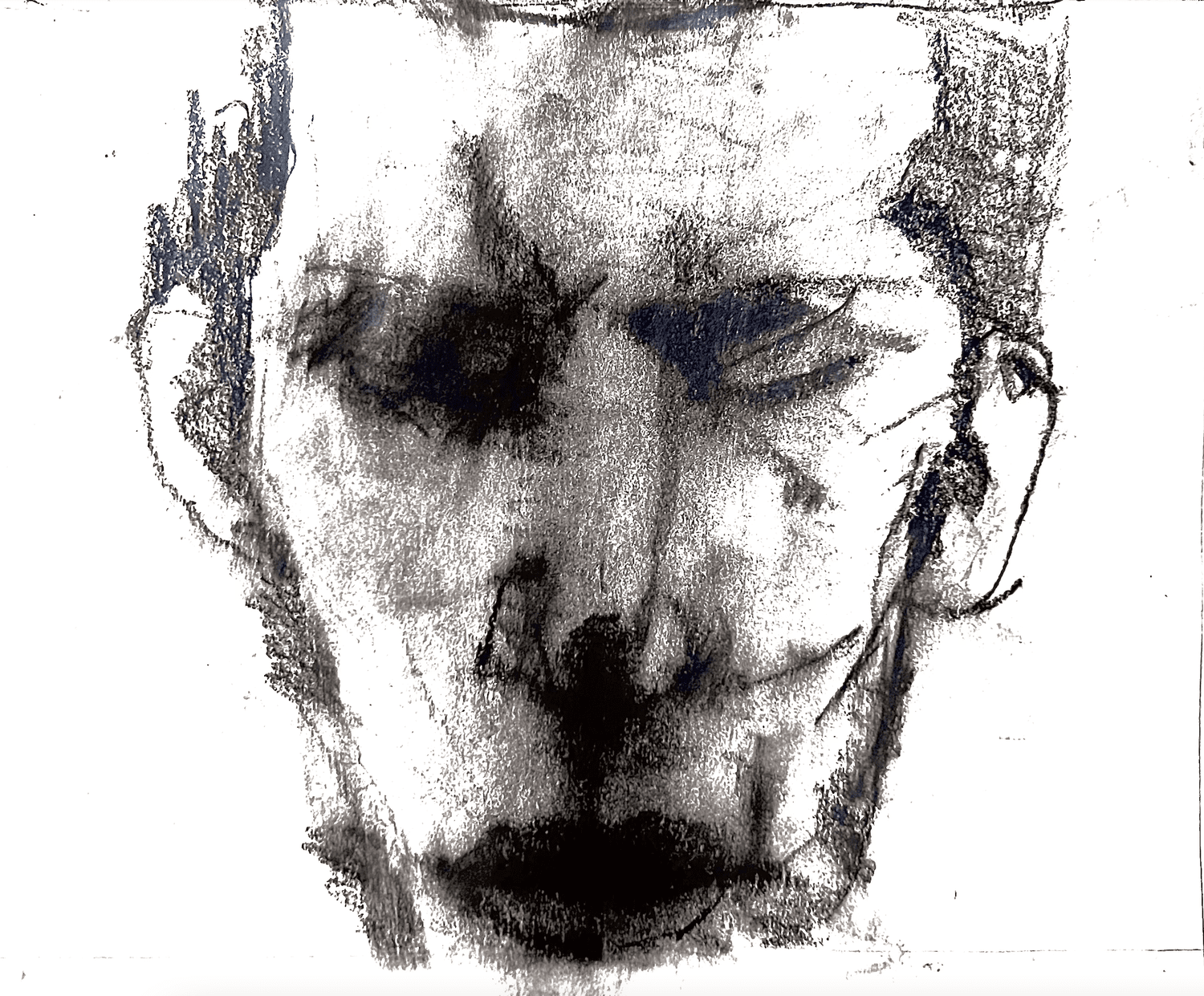
The World Goes Bright
2026
I had a meeting to get to. That was the first mistake.
Even though I had taken the motorcycle safety class three times, I didn't take this one lesson to heart: you don't ride a motorcycle on a deadline. Every experienced rider knows this. The deadline is in your body, in your reflexes, before you're even on the bike. It's in the way you check your mirrors less, accelerate earlier, make the small calculations that shave minutes off a ride at the cost of the margin that keeps you alive. I knew this. That May morning in 2019 I got on the bike anyway.
I was moving between lives. My family home in New Jersey, a new apartment in Pennsylvania, a new role in a new state. My lovely Moto Guzzi V7 Stone, a classic, a standard; I wanted it with me at the new place. One easy ride, through safe local streets and along the tranquil Delaware river, get there in time for the meeting. Simple enough.
It was a 35mph residential street in suburban New Jersey. Double yellow line, one lane each direction, parking on both sides. I saw the delivery van half a block up, double-parked, not moving. I made the calculation. I crossed the yellow line and revved up to pass it.
As I got close the driver decided to make a left turn into a driveway across the street. An illegal U-turn. I rode straight into the side of it. I was able to turn my body a little, kick the bike left in a jumping move, deflect what I could. I ate the side of the van with my right shoulder.
What I remember last: the world going bright, as if I was staring into a wide lightbulb inches from my face. Not dark…bright. My eyes must have opened wide and let everything in at once. Every photon available. The filter dropped completely. Then a quick nothing.
——
I woke up on the pavement unable to breathe, about fifteen feet back from where I hit the van.
The pain was unreal. I couldn't move. I tried to lift myself on my hands but my body wasn't listening. I know I was roaring…I know this because I later obtained the body cam footage from the first responders and I was definitely roaring, a sound I didn't recognize as mine. But in the moment I wasn't thinking about the sound I was making.
When you have to consciously tell yourself to breathe…breathe, exhale, breathe again…the automatic functions having stopped, the body waiting for instruction from a mind that is also trying to figure out if it still exists. You stop thinking about meetings.
I was mad at myself. Not scared. Mad. Lying broken in the middle of a residential street in New Jersey, unable to move my legs, roaring like something wounded, and what I felt most clearly was anger at myself for being in a hurry. For letting a deadline climb into my helmet with me.
Then something shifted. I can't explain it as anything other than a decision. Immediate, clear, without deliberation. It doesn't matter and I'm going to live. And with that came a strange patience. The road was just the road. The pain was just the pain. I wasn't worried about lying in the middle of it. It was just what it was.
An elder gentleman approached me. He leaned down so his face was in my field of vision, so I could actually see him through my half-kiltered sunglasses, and he nodded. Slowly, once, and smiled. The nod and smile said: help is on the way. You are not alone.
No words necessary. Just a face leaning into mine, a nod and a smile, and everything that needed to be communicated, communicated.
The knobby-toed boots of the rescuers entered my frozen vision of the asphalt not long after.
——
I had broken many bones. Nearly every bone on my right side fractured or compromised. The first responders cut off most of my upper body clothes at the scene to check my spine. A first responder ran his palm down my back, stopping at intervals. Feel that? Feel that? They had to leave my helmet on in case of skull fractures. The paramedics in the ambulance said they were impressed I wasn't dead.
I obtained the body cam footage later. I’ve watched it more than once, trying to understand what I was looking at. The police officer asking questions of this black and grey clothed figure-splotch on the ground. The half-dozen first responders gingerly moving me to a board, then to a stretcher. The faces of the people who had come out of their houses to see what the noise was about.
I didn't recognize any of it. Not the scene, not the faces, not the sounds. Not myself.
The way it was filmed was not how I remembered it. I had been seeing the world through the filter of pain and the raw need to survive. What the camera recorded and what I experienced were two completely different events happening in the same place at the same time. The person roaring on the ground was me and also not me. I watched him the way you watch footage of a stranger.
(I'd felt this before. Standing on a subway platform years earlier, coming back from somewhere so deep inside nothingness that my surroundings looked different. The colors adjusted by two degrees. The person I thought I was and the true me briefly separated, visible to each other across a small gap).
The crash was that, but from the outside. And much louder.
——
There were about eight hours between the accident and my family being notified. The people at my new role were concerned I'd missed the meeting. They eventually called my ex-wife. When she arrived at the hospital I had completed most of my x-rays and scans, was wired up and connected to monitors, had a neck brace on, and still nauseous from the concussion. (All of my clothes were cut from my body in the very very cold trauma center all while they left my helmet on. I was too groggy to be embarrassed). She had to witness me unwell and there wasn't much she could do.
The trauma radiated outward from that residential street in ways I couldn't control and couldn't undo. My kids, a teen and a pre-teen at the time, carry the knowledge of how close it was. That's not something you unknow. That's something I am not proud of. As a dad all I want to do is protect them.
My ex was not a fan of the motorcycle. The accident didn't help, not the second one (keep reading). The costs of that morning are still being settled, in ways that have nothing to do with bones.
——
Three months of pain. Then slowly less. Then one day I got back on the Moto Guzzi. I had to decide what kind of person I was going to be about it. I got back on.
I rode for another year or so. Then a second accident, not as bad as the first, only 8 fractures, but an indicator (when the paramedics arrived they were struck by my calm demeanor. I sat quietly on the curb awaiting their arrival. I said, “You should’ve seen me last time.”). The universe doesn't always need to roar to make its point. Sometimes a second, quieter signal is enough. I recognized it for what it was. My time on that motorcycle was over.
What the crash gave me, alongside everything it cost me, is a new patience. That clarity of the road being just the road and myself lying on it, part of it. The knowledge, now fully bodily rather than theoretical, that the filter of one’s self can drop in an instant, and what remains when it does is not nothing.
It's everything, without the noise.
You don't feel the earth turn. You know it through gravity, through the fact of night following day. From a clock. The crash is like that now. Not something I feel. Something I know through how I see and measure everything that came after.